Sunday, May 14, 2023

School Spirits

Okay, enough with the negative reviews. Time to talk about something really, really good: School Spirits.

Streaming from Paramount+, School Spirits is a supernatural crime drama staring Peyton List and Christian Flores. 

Peyton List plays Maddie Nears, a teenager who has just died and whose spirit is now stuck at school. But she has no memory of how she died or where her body is.  The show follows Maddie's ghost and her living friends as they try to solve the mystery of what happened.

Each episode the kids investigate a different potential suspect. First Maddie's boyfriend, then her teacher, then.... (hey too many spoilers). Each episode ends with the kids discovering a clue that clears one suspect and casts suspicion on a new one. Keeping my interest right up to unexpected twist at the end of the first season. (and no, I'm not going to tell you what was finally revealed.)

Along the way we meet many of the other ghosts who've died at this school over the past 60 years, all of whom are trapped there, with no way out. Maddie forms personal connections with four of these other ghosts, and these friendships provide some deep and beautiful character moments.

In spite of the fact that I usually hate high school dramas, School Spirits proved to be one of the best shows of 2023, thanks in no small part to Peyton List's superb performance. But I'm giving this show high marks all around: Excellent writing, directing and acting from everyone involved in the show. I'm looking forward to season 2.

Saturday, May 13, 2023

Class of '09 TV show

Class of '09 is a sci fi crime drama now airing on the FX channel and streaming from Hulu. The show follows four  FBI agents in three different periods of their careers: as cadets in '09, as mid-level agents 2023, and as senior agents in 2034. 

More importantly for sci fi fans, in 2034, the FBI has replaced most of its analysts with an AI that can predict crime and stop it before it happens. 

In the pilot's first scene,  which takes place in the future, the AI sends two agents who apparently haven't seen each other for years to arrest a man without explanation. But instead of finding him, they find a recording of the FBI director (another classmate) claiming the US is now the safest nation on Earth. 

Without preparation, were suddenly thrust back to the moment they meet - their first day of training at Quantico. After a few moments seeing the characters here, then were sent back further in time to when one of them was recruited. (I almost turned off the show right there. I hate flashbacks within flashbacks.)

To write a fair review, I watched the first two episodes. But I couldn't get into the show. Time jumps happen frequently and without preparation.  One minute we're seeing them in at training, then in the middle of an under cover assignment 14 years later, then back to training, then back to 2034. This  totally destroys the rhythms of each story line, and makes it impossible to connect with any of the characters.

The events in each time period seem totally disconnected from the others. There's no mention of the AI in the 2009 or 2023 scenes. No mention of the 2023 crimes in the 2034 scenes. (At least not in the first two episodes.) And in the 2023 scenes, the agents are working totally separate cases. So you're trying to follow six different story lines.  That is way too much.

 In the future scenes, there are hints and accusations that the AI has gone rogue. But these scenes are so brief and the acting is so wooden, you don't care. Brian Tyree Henry, playing the FBI director, looks like he's stoned or sleep walking through these scenes. Kate Mara is nearly as dull. (The other two supposed leads are barely present through the first two episodes.)

 While I normally like to see TV shows try new innovations, Class of '09 simply doesn't work.

Sunday, May 7, 2023

Chindi

Chindi is the third novel McDevitt's Academy series. But fortunately, you don't have to read the other books to enjoy (or hate) this one Chindi stands on it's own.   

On a routine survey mission studying a neutron star, an Academy starship discovers an alien transmission, but can't track it's origin.
 
Five years later, a satellite finally encounters the signal again, which inspires the Contact Society, a wealthy group of enthusiasts to launch an expedition to track it's origin.  Providing a starship to the Academy to be piloted by Captain Priscilla “Hutch” Hutchins, the Contact Society embarks on a mission to find the source of the transmission.

The novel proceeds like a slow motion scavenger hunt across multiple star systems. And I do mean "slow" McDevitt brilliantly describes the settings, capturing the wonder and awe of alien starscapes. But totally fails with character development.

On page 335 McDevitt explicitly states the recurring theme of the book: 

There have been studies over the years supporting the proposition that groups composed entirely of women usually made intelligent decisions, that exclusively male groups usually did a bit less well, and mixed groups did the most poorly of all.  It appeared that, when women were present, testosterone got the upper hand and men took greater risks. Correspondingly, women in mixed groups tended to revert to roles, becoming more passive and going along with whatever misjudgement the males might perpetrate.

I've seen a few studies on groupthinking and I think this can be true when the women are of lower social rank, new to a group, or subordinate employees. But NOT when the woman is accomplished in her own right, achieves a rank as high as starship captain, or is the only experienced person in a group of amateurs. McDevitt misapplied the theme, and diminishes his heroine, his starship captain, to behaving like teenage schoolgirl desperately trying to fit in with the 'cool kids'. The reader wonders how she ever achieved the rank of captain.

Definitely NOT the way to write a memorable heroine, especially not in the 21st Century.

The other characters are given detailed backstories as they are introduced. (Essentially infodumps) But by the time you're way into the novel half are dead (due to stupid decisions) and rest feel interchangeable. And the frequent POV shifts do nothing to distinguish one from another. 

The conclusion was a major disappointment. The author wrote himself into a corner with the final rescue. And instead of showing how his heroine resolved it, he skipped over it to the point after she had been rescued. And the mystery of the Chindi is left unresolved.

Definitely NOT how I'd write an epic space adventure.


Monday, May 1, 2023

Six Wakes

Six Wakes is a sci fi murder mystery from Mur Lafferty. Five clones (the AI makes six) on a deep space mission wake to find that their previous incarnations have been murdered, they've lost 25 years worth of memories, and the ship's computer has been sabotaged.

Complicating the problem is the fact that all of the crew have criminal pasts. Although their previous incarnations apparently worked peacefully together for over 20 years, these clones don't know each other, and don't trust each other.

Perhaps I watch too much TV. But it seems like the author combined the idea of cloning with the premises of two recent TV shows, School Spirits (where the lead character wakes as a ghost and tries to solve her own murder), and Dark Matter (where six people wake on a space ship with no memory of their past). But the crew of Six Wakes do remember their lives before joining the crew, and flashback chapters reveal that those pasts to be more connected than even their previous incarnations knew.


The Writer's Perspective

Although the story rehashes familiar territory and none of the characters really stand out, Lafferty seems to have a gift for foreshadowing. She weaves hints and clues of what's to come into each character's backstory. I was impressed with how she foreshadowed the characters' prior connections without revealing too much too quickly. This helped the story unfold at a good pace and kept me interested enough to keep reading.


Tuesday, April 25, 2023

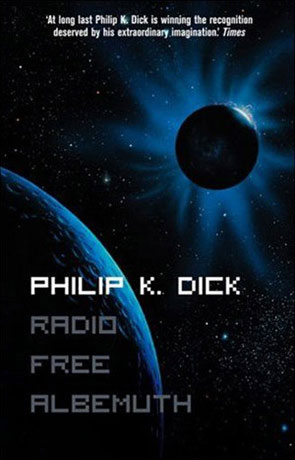
An Essay on Philip K. Dick’s novel, “Radio Free Albemuth”

 In 2004, I was prompted to write an essay to address the following question:  Is America's role in the world contributing to the enhancement of general human welfare?

I had just finished reading  Philip K. Dick’s novel, “Radio Free Albemuth”. So I based my essay on that reading.


I recently read Philip K. Dick’s novel, “Radio Free Albemuth”. In this book, Dick speculated what might happen if the people accidentally elected a paranoid fascist dictator as the President of the United States. Dick died in 1982, and his estate published the book posthumously in 1985. But it’s amazing how closely his vision resembled the events of 2002-2003.


Dick’s fictional villain, Ferris F. Freemont, traveled the country speaking of threats from subversive elements out to destroy the United States. Like Hitler in the 1930s, he used patriotism and fear to rally the people behind his cause. He created the Friends of the American People (FAP). A Nazi-like organization that got people spying on each other in order to ensure their loyalty to the President.
 

Dick’s three protagonists were a novelist, a singer and a record company executive. Since recording artists often have the ability to inspire people’s passions and rally them to a cause, FAP wanted to prevent the singer from recording any music that might criticize the President. They blackmailed the writer into spying on the record executive, and the record executive into spying on the singer.
 

As I read Dick’s novel in March 2003,  I couldn’t help noticing the similarity to the Dixie Chicks controversy. President Bush was traveling the country in 2002 spreading fear about Al Qeada’s and Iraq’s potential for attacking American citizens. Bush said it was essential that we start a war with Iraq. And when a recording artist, Natalie Manes of the Dixie Chicks, criticized Bush’s position, the country jumped on her. 


Political commentators and several major news organizations blasted her. “Support your President,” they insisted. “Doesn’t he deserve your support?” they asked rhetorically. Political commentators harassed her for weeks. Bush’s supporters sent threatening letters, staged protests, and burned her CDs. They pressured her into backing down and apologizing for exercising her right to free speech.
Although Natalie Manes backed down, many other people stood their ground. Janeane Garofalo, Martin Sheen, Mike Farrell, Tim Robbins and nearly 100 other celebrities banded together and continued speaking out against the U.S. starting a war with Iraq. These people weren’t just fighting for peace, they were fighting for their Freedom of Speech. 


The founders of the United States declared that freedom of speech was a basic and inalienable right. Opinions expressed at the time reflected a belief that without the freedom of speech, there could be no true liberty.1 If the ability to pursue liberty is a measure of human welfare, then our welfare has been under a malicious attack by those claiming to cherish it. 


Like Dick’s fictional FAP, the mainstream news media can sometimes act like an oppressive watchdog organization, spewing propaganda under the guise of patriotism and unbiased reports; and doing everything possible to discredit or silence other voices. Dick’s novel shows clearly how losing the freedom of speech can create fear and mistrust among people, and how people ruled by these emotions become afraid to stand up for their rights, or the rights of others. They become afraid to openly question even the most obviously false rhetoric and propaganda.
We must never let these things happen to us.


Natalie Manes showed us that we need to stand up for our Freedom of Speech or it can be taken from us; and with it, our liberty. Tim Robbins and other celebrities show us that we can still stand up and fight for our Freedom of Speech and our liberty. But celebrities cannot do the job for us. We must all maintain the ‘eternal vigilance’ necessary to become aware of these attacks on our freedoms, our liberty and our welfare. 


The United States remains a rhetorical battlefield in which we must continually fight for the right to create a better society. We are all soldiers in this fight. Together we all must stand up for our beliefs and continuously fight to protect our Freedom of Speech.  When Americans fight to protect the Freedom of Speech, we contribute the most to general human welfare. 


It's amazing how good science fiction can remain relevant for so many years in spite of changing culture and technology.